Category: Story

  • PRS guitars (and why I adore them)

    PRS guitars (and why I adore them)

    I first learned about PRS guitars from a print advertisement in a guitar magazine in the 90’s. I remember the guitar being unlike anything I’ve ever seen before, with highly figured wood and a very orange paint job. The artist was from some nu-metal band, I forget which; there were quite a few of those around back then. I didn’t give the brand much thought; none of the stores in my area sold PRS, and as a penniless high schooler I was content with my Epiphone SG copy.

    A lot of time went by before I took another look at PRS guitars. It wasn’t until I moved to the DC region that I got to see one in person. By then the guitar gear YouTuber was very much a phenomenon, and they raved about how perfect these guitars were. Some said that this was even a drawback; much like automobiles that are too well-engineered, PRS guitars can come across as, they said, a bit sterile and emotionless. A few repeated the “they are too pretty to play” viewpoint. But none of them contested the guitars’ playability and craftsmanship.

    My first PRS

    One fateful day after the 2018 Paul Reed Smith Experience, an event the factory hosts every year, the local Guitar Center had a McCarty 594 SC (single cut) semi-hollow hanging high up on the wall. It looked like this:

    I tried it out at the store, and three things struck me:

    1. It was also pretty up close, and;
    2. Wow, it was really easy to play, and;
    3. I can’t get a bad sound out of it!

    The difference is in the details

    There’s a tremendous amount of handwork that goes into making these guitars. Up until this point I was used to the concept of “handwork” as exercised by Gibson, which meant obvious signs of filing, scraping, and the occasional screw up. Not on the PRS: the fingerboard was the darkest rosewood I’ve ever seen and finely finished, with no file chatter marks. The fretwork was astounding with no high frets causing buzzing.

    And as I played, it was obvious that the guitar had more than just a pretty face. The neck felt perfect. The knobs were of a different make and turned almost too easily. And the sound!

    This guitar had “PAF style” humbuckers, so-called because they resemble the covered (and coveted) “Patent Applied For” humbucking pickups on the original Gibson Les Paul. I was used to modern Gibson Les Pauls with modern PAFs that sounded muddy. But these had a clarity that I’ve never heard before, and sang into the high registers without being shrill. (I would later find out that the original PAFs were rather bright-sounding, meaning that at the time PRS got closer to the originals than Gibson itself.)

    This particular guitar was a semi-hollow version of the standard solid-body McCarty 594 (PRS has a way with naming things) and was available only for a limited time. The salesman also gave me a great price. So I took it home, making it my first PRS ever.

    If you build it…

    I learned more about PRS as a company as time went by. Its founder, Paul Reed Smith, did guitar repairs for a guitar store in Maryland named Chuck Levin’s. He went on to make his own guitars, and went on in 1985 to start the company bearing his own name. He convinced one of Carlos Santana’s roadies to give Santana a guitar Paul made for him, survived some early close-calls, delivered two more masterpieces, and Santana’s been playing PRS ever since. I got to see him introduce the 2020 lineup at Chuck Levin’s and he said something that gave me some insight into how he thinks. He thinks like a builder, a tinkerer. While folks from Gibson and Fender go on about historical accuracy and their heritage, Paul said stuff like:

    “Everything the string touches is God.”

    And he went on to explain why he selected the materials he did for anything that touches the string to give it as much freedom to vibrate as humanly possible, giving the guitar as much note sustain as possible. He mentioned a comparison test between his guitars, some vintage Gibson Les Pauls, and modern-era Gibson Les Paul historical reissues at a store he didn’t name but had a dedicated Les Paul wall. (We all know that this store is Chicago Music Exchange.) His guitars and the vintage ones rang out for 40+ seconds. The reissues didn’t even make 20. The salespeople there were kind of depressed.

    Something old, something new

    PRS may have earned an early reputation as a nu-metal guitar brand, but this isn’t to say that PRS doesn’t pay any attention to guitar history and its icons. They’ve actually done the opposite. One of Paul’s own first guitars was a Gibson Les Paul Junior copy. Later his company issued the “Singlecut” (later succeeded by the SC245) which resembled the Les Paul. Gibson thought it resembled it too closely and started a lawsuit which PRS later won.

    In future years PRS would release the McCarty 594. The name is history in two parts: Ted McCarty was Gibson’s president until 1966, and ran the company as it pumped out many of its iconic designs and patents. Paul hired him as a consultant. The 594 comes from its scale length which matches that of “vintage guitars” (i.e. the Les Paul) at 24.594 inches. Paul himself admits that he was inspired to make this guitar during one of his clinics in which he raved about the guitars of the 50’s and 60’s, and in which someone in the audience basically responded with “yeah we don’t know what they sound like so what’s the big deal?”

    The McCarty started as a double cut. PRS then got bolder and issued a single cut which is pretty much a Les Paul. For 2020 it even has keystone tuners that mimic the Les Paul’s Klusons.

    PRS’ homages to history don’t end there. There’s also the Silver Sky, John Mayer’s signature guitar, which is PRS’ riff on a Fender Stratocaster from the 60’s. It lit the Internet on fire when it was announced; some folks hated it. Then it got into peoples’ hands and everyone learned that PRS made the best Fender Stratocaster available today. Backorders stretched over a year, and PRS had to put more people into its production.

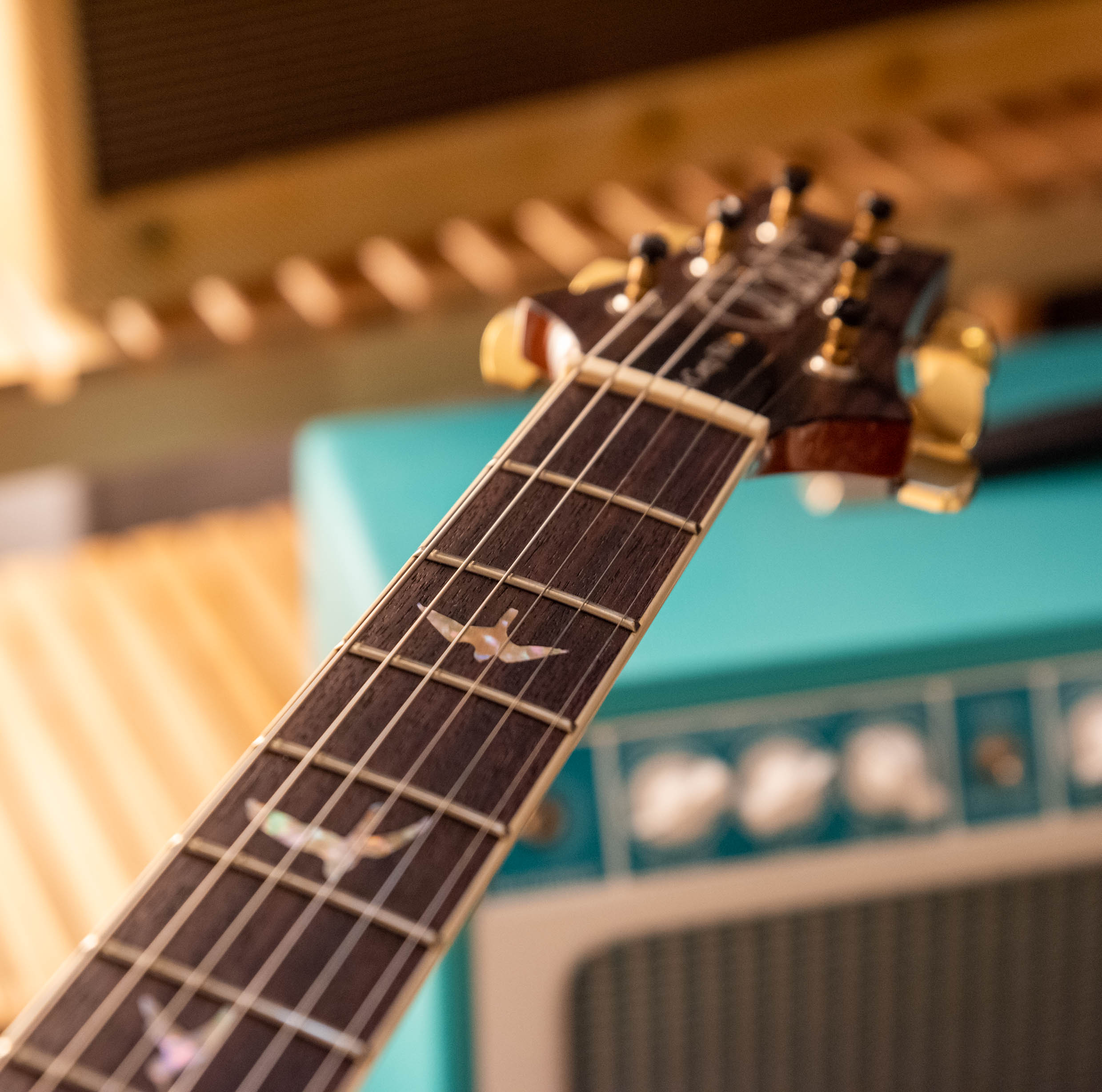
    At the same time, PRS puts out models like the Special 22 Semi-Hollow and the Modern Eagle V, so it’s not all vintage homages. You still get beautiful woods, great playability, and the iconic birds on the fretboard.

    What’s next

    For PRS, it’s the pickups. For decades, pickup makers tried to mimic vintage pickups by replicating their winds, materials, and even acquiring and using the same old machines that once produced them. PRS tried a different approach, coming up with what they’ve branded as “Tuned Capacitance and Inductance” or TCI for short. They have a whole video explaining what it is, and I honestly can’t tell a lot of difference. But where I do tell the difference is when you split the humbucker and, instead of dropping in volume, it sounds about as loud!

    I went on to sell the 594 semi-hollow, but after seeing Paul at Chuck Levin’s I couldn’t pass up on a deal to get another one, this time in River Blue in a “10-top” (read: prettier wood) with “hybrid hardware” (read: you get nickel AND gold!) It didn’t have the new TCI pickups but it sounded spectacular. And I even got it signed by the man himself.

    So far I’ve written (poorly) about Gibson and PRS. Of the current top three electric guitar manufacturers, that’s two. You know what’s coming next.
  • Gibson guitars (and why I adore them)

    Gibson guitars (and why I adore them)

    Gibson guitars are divisive. Go search your internet forum of choice for “gibson” and you’ll come across posts ranging from high praise to rants about their high prices and lack of quality control. And yet, Gibsons remain popular guitars, right up there with arch-rival Fender. I think it’s because of their iconic designs (of course), but also because if you ever pick one up, you feel like you’re holding a piece of history. Gibson guitars are still, after all these years, set-neck guitars featuring a large amount of handwork and that take a lot of time to make. Augmented by machine, yes, but as of today no machine is going to glue on a neck for you, no machine is going to file down the binding on the neck for those little fret “nibs”, no machine is going to spray the “sunburst” finish, and no machine is going to make that finish dry any faster.

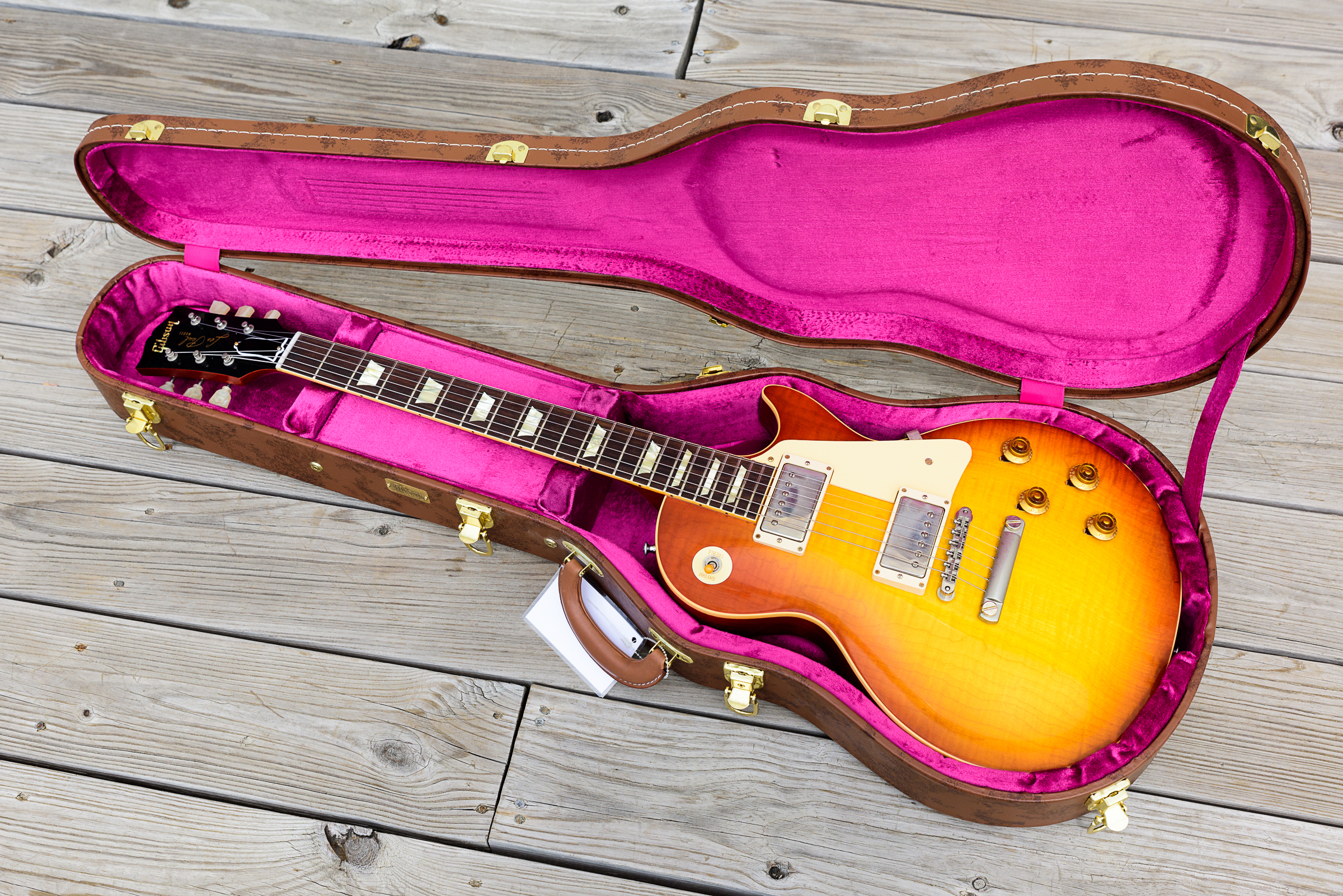
    An example of a “sunburst” finish. These can range from very dark (“tobacco” or “dark burst”) to almost nonexistent.

    Compare this to Fender electric guitars. Leo Fender was a smart guy and had mass-production in mind when developing the bolt-neck style guitar. Take a neck, take a guitar body that was painted separately, bolt it together, and you are done. No waiting for glue to dry. And Fender, for the most part, has done away with the use of nitrocellulose lacquer (“nitro”) that takes weeks to cure, opting instead for catalyzed finishes such as polyurethane that dry thin, hard, and fast. And while a few models sport “burst” finishes, you see a lot more solid colors in their lineup.

    Also compare this to PRS guitars. PRS, founded by Paul Reed Smith in 1985, is a much newer company than either Gibson (founded in 1902 by Orville Gibson) and Fender (founded in 1946 by Clarence Leonidas “Leo” Fender.) Paul Reed Smith is obsessive with detail, and the guitars his company makes show it. Great and consistent quality, fit, and finish. Necks are done by hand as well, and they aren’t budging on how long it takes to do them properly. Go and pick one up and you feel like you’re holding a precision instrument. Utterly reliable.

    But sometimes you don’t want precision. Sometimes you want tradition, even if “tradition” is a bit rough around the edges.

    I’m going to use a car analogy: if guitars were cars, PRS would be something like a German automobile. Stellar and machined to tolerances usually reserved for aerospace. Fast as hell and carves corners like a scapel. But utterly without humor. Fenders would be American cars, designed to be made with average parts thrown into a super efficient assembly line in Mexico and churned out by the thousands per day. Has cupholders. All identical and un-special.

    Gibsons would probably be British cars, handmade using old school methods by folks who mostly pay attention. Not flashy enough to be Italian, but probably as reliable. They ooze heritage. and this tends to overwhelm the parts used in assembly. That door handle falling off? Pure heritage.

    I like Mercedes Benz. I like Ford. But neither of these are Jaaaaags.

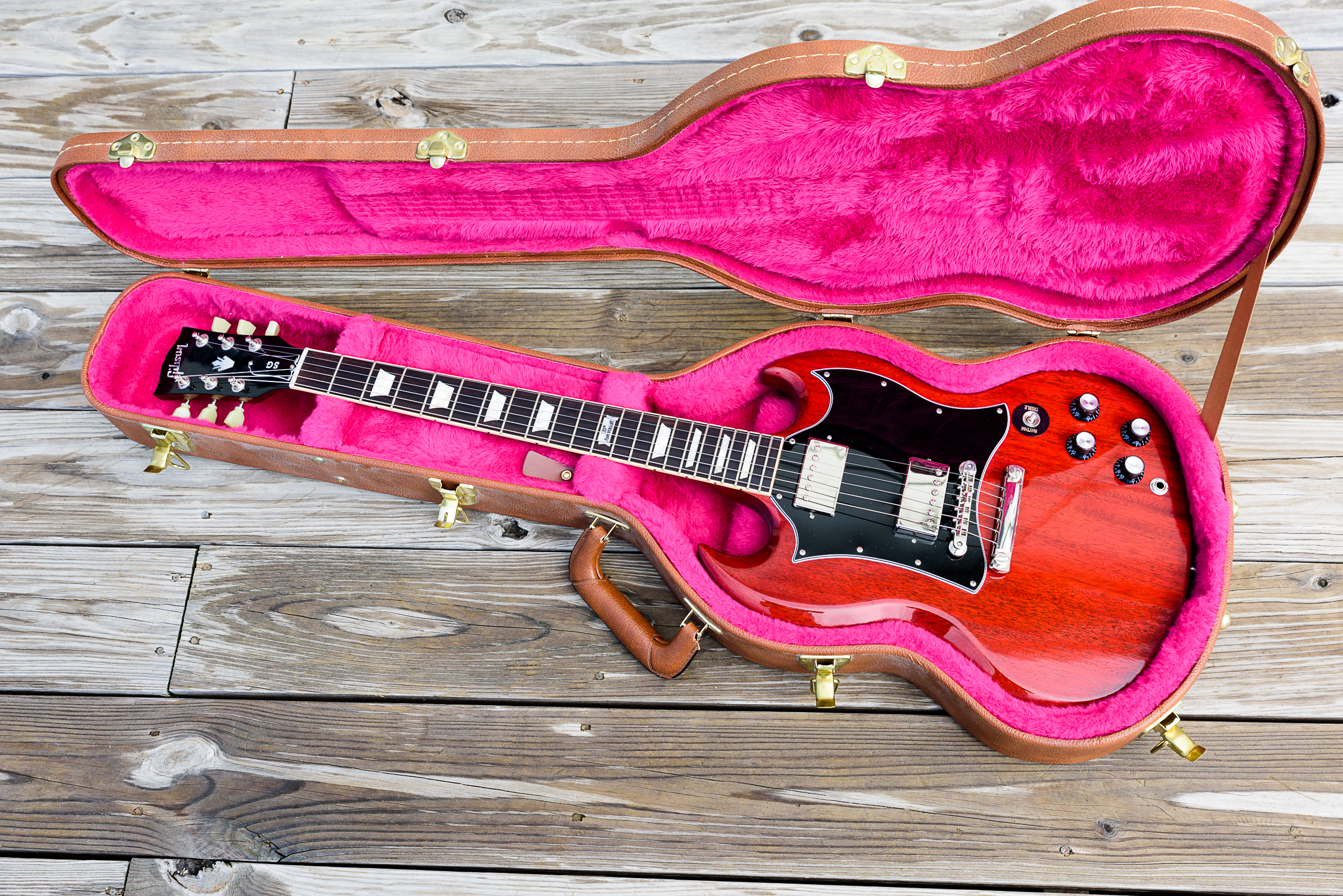
    And this is pretty much how I feel about Gibson in relation to other guitars. Open up the case and you get hit in the face with the smell of nitro lacquer. Pick one up and look closely to see where the person putting it together started thinking about lunch, and forgot that they were assembling a $2000+ musical instrument. Play one and listen to it honk and rip. And set it back down again to admire the swell of the Les Paul’s carved maple top, the gentle curves of the ES-335, the vivid cherry and pointy horns of the SG, the futuristic shapes and angles of the Firebird, Explorer, and Flying V. All flawed and all spectacular, and all designed by (or under the tenure of) Ted McCarty, who retired from being Gibson’s president in 1966. So these designs are old, just like your parents.

    I do admit, however, that for the amount of money these things go for, the fit and finish could be better. And good news, the new Gibson leadership believes that too. After conducting a long and exhaustive study on how their guitars were made, Gibson concluded that better factory lighting would probably help workers see what they were doing.

    The fact that this was even a finding helps illustrate how little the former leadership cared. In 1986, Henry Juszkiewicz, David Berryman, and Gary Zebrowski bought Gibson from Norlin Musical Instruments, rescuing the company from mismanagement and decreasing quality. Henry became CEO. After successfully revitalizing Gibson and bringing the Les Paul back from intensive care, Henry then put his Harvard MBA to good use to repeat all the mistakes Norlin made and then some. He proved unwise with the company’s finances, acquiring firms like Teac and Onkyo to try and make some kind of big music gear conglomerate out of it all. He proved an ineffective leader, losing (usually by terminating) great talent and knowledge, including Edwin Wilson and Rick Gembar, two luminaries in the Gibson Custom Shop who did a hell of a lot of research into backwards-engineering the original Les Pauls from the 50’s so that today’s Gibson could replicate them. And he led some pretty god awful product launches, trying to modernize Gibson’s guitar models and severely underestimating the pushback from customers who didn’t want any of that.

    A great example was the Firebird X. It was a bold play and a disaster. Here, watch a demo. And get a load of this press photo, showing Henry swinging some type of SG into a cinder block:

    Out with the old, in with the new. Unfortunately, no one asked for new, and the new sucked.

    The utter failure of the Firebird X remained a sensitive topic for Gibson while Henry was still around. Gibson visitors were kindly reminded to not mention it.

    Another great example was the 2015 model year, in which Gibson decided to make some money off of its acquisition of “auto tuning” technology from a German firm called Tronical, and put robot auto tuners on every guitar. The uproar was enormous. No one wanted a 2015. Well, maybe some younger players did. But because they were all broke, they bought Ibanez instead.

    Henry, probably puzzled with how to handle the burgeoning millennial market segment, decided to make it a non-issue entirely by raising prices, ensuring that no one under 40 would be able to afford a Gibson. It got pretty unreal, with Les Pauls (more specifically, the “Les Paul Standard” benchmark model) selling for around $2600 in 2016 to over $3000 in 2018.

    The real reason was probably because Henry believed that Gibson guitars were “Veblen goods“, and boy did he put that theory to the test. And if folks wanted a cheaper Gibson, well hey, there was the no-frills Faded, Tribute, and Studio lines, and the entire Epiphone brand. But he seemed to ignore the fact that once you go past a certain price point, customers would appreciate it very much if the door handles remained on the car.

    Despite all this, Gibson (the guitar company) was profitable. Unfortunately, Gibson (all the other brands) was hemorrhaging money, and Gibson Brands declared Chapter 11 bankruptcy in May 2018. All those other firms were spun off, and Henry was no longer CEO (despite probably desperately trying to hold on.) He was replaced by someone with a better education and background.

    James “JC” Curleigh, bachelor’s from Saint Mary’s University, was able to turn around a company struggling with many issues Gibson was facing. That company was Levi’s, once known for making great jeans, and more recently known for making crappy ones plus some other stuff no one wanted. He pivoted that company back to profitability by focusing on the traditional. And he’s looking to repeat that strategy at Gibson, introducing a “Original Collection” line of guitars that are basically the guitars Gibson made back in its heyday, with all the more modern stuff under its “Modern Collection” for that younger demographic unbound by tradition that, by now, have managed to earn some money by streaming on Twitch.

    He also understands social media, something Henry was never able to do. Look at Fender’s YouTube presence. It’s huge, with over two thousand videos, over 400k subscribers, and counting. Gibson had a handful of videos and a sorry Facebook page. Probably also an Instagram but no one cared. Now, Gibson has Mark Agnesi, someone who knew YouTube well enough to make a sleepy guitar store into a big YouTube deal, making videos of its new lineup. And people are loving it. (They’re subscribing, at least.)

    And prices are now back down to earth. The Les Paul Standard goes for $2499. It hasn’t been this cheap for years. And having held and played two of them, a 50’s model and a 60’s one, they are a whole lot more guitar for the money. And they are selling everywhere. Sweetwater is going through them like mad, and I check every day to find one with a great flame-y top. The two that I saw in-person sold in a week.

    Will JC repeat his Levi’s win with Gibson? Only time will tell. Fender has a head start of a few light years, having done actual market research. And PRS still maintains a high and consistent level of quality, probably because they refuse to scale as large as these two behemoths (and I don’t fault them for that.) But the beginnings of a turnaround are there, just in time for the 60th anniversary of Gibson’s most iconic guitar model, the ’59 Les Paul. Good timing!

    Will I get one? Probably. I have a 2016 Les Paul “Traditional” that’s pretty good. It’s close to the Original Collection Les Paul Standard in terms of features. It’s also my first Les Paul ever, so it has sentimental value. And it’s well-built and made, so I guess they were paying attention that day.

    On the other hand, I think the new ones are better. I paid $2200 for the 2016 in 2016 dollars, and replaced some parts with better aftermarket ones, so it ended up being more expensive than today’s $2499 Standard. And I recently sold my first Gibson ever, a 2014 SG, to a happy buyer on Reverb, so I’ve learned to say goodbye to things. I think now it’s about finding “the one” and that, for me, will probably involve finding one at the local Guitar Center, trying it out, and being amazed enough to fork over the cash. But that’s probably only a matter of time, as the new models make their way into stores.

    There are still reports on the internet about quality control issues here and there, and it’s probably going to take more than just better lighting to iron those out entirely. But I think Gibson is back to doing things right, and I’m not the only one. And they’re still set-neck, hand-painted, maple and mahogany, just as they have been for the past 60 years. If Gibson continues to struggle, I don’t think it’s going to be because they can’t make great guitars.

    I think it’s going to be more about continuing their social media push to reach out to growing market demographics. Again, Fender got the head start, especially with women. But Fender has also raised prices and revamped their lineup to be more contemporary and is experimenting with some new and sometimes weird designs. (Sound familiar?) It’s strange when a bolt-neck guitar with the obscure “Made in Corona” stamp is around the same retail price as an unambiguously Made in USA set-neck, nitro-finished guitar.

    It’s going to be a tough fight but I think Gibson is making the right moves. And at the end of the day, there is absolutely nothing else like opening a Gibson case, smelling the vanilla of the lacquer, and picking up what’s inside. Nothing else like holding a weighty, fat-necked, sunburst Les Paul. Nothing else like plugging it into a Marshall and hearing its humbuckers snarl. Gibson guitars have been music icons for over half a century.

    And with the new generations learning about them and appreciating them, they’re probably going to continue to be for a little while more.

  • PAX

    PAX

    I first read Penny Arcade in college, around the early 2000’s. The artist and writer duo, then known only by their Internet monikers of Gabe and Tycho, made comic strips on the Web using Comic Sans with punchlines involving John Romero (one of the creators of Doom, for you non-gamer scum.) The art was crude, as was the humor, and I found it strangely compelling. Little did I, or anyone, know that the webcomic would grow to be a commercial success, and not just as a webcomic: the Penny Arcade team now organizes some of the largest video- and tabletop gaming conventions in the world, all branded as the Penny Arcade Expo, otherwise known as PAX.

    PAX East expo hall
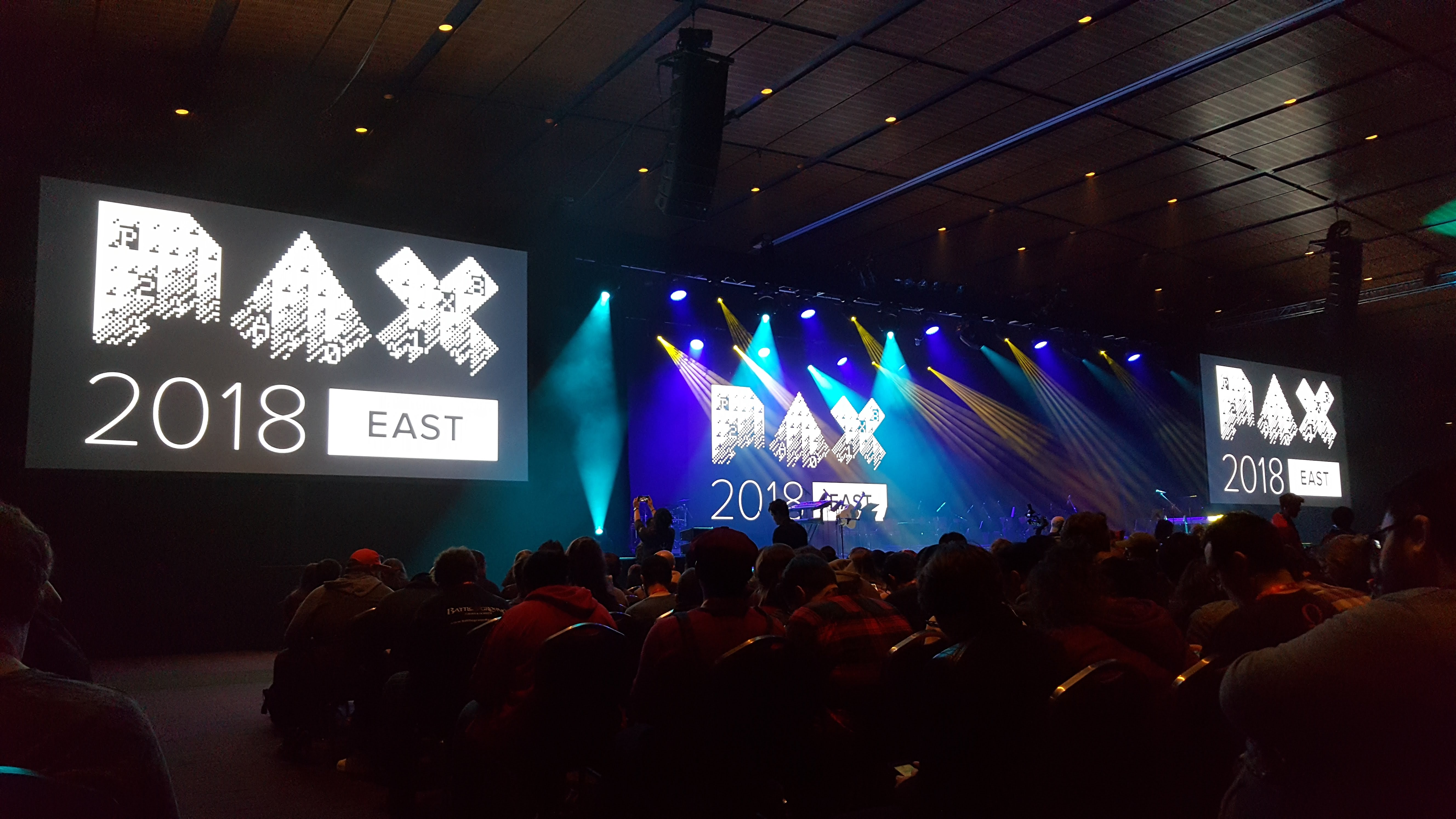
    The Expo Hall at PAX East 2018, held in Boston.

    The first PAX was held back in 2004 in Bellevue, Washington. Around 3,000 nerds showed up. Now, PAX is held in four locations, three in North America and one in Melbourne, Australia, and attendance is in the tens of thousands. There’s also a “PAX Unplugged” devoted solely to tabletop and board games, hosted in Philadelphia. (And if you’re a developer, there’s “PAX Dev.” But that one is kind of specialized so a lot of what I’m writing won’t apply to it.) Ticket sales are announced the day of on Twitter and sell out quickly, if not instantly. Everyone who is anyone in the gaming industry makes an appearance.

    Yoko Taro
    The man, myth, and legend, Yoko Taro. Yes, he wears that all the time.

    But the real stars of the show, besides the crew of Penny Arcade, are the gamers themselves. Events like E3 were press- and industry-only. PAX was, and is, open to everyone. Of course, companies jumped on the opportunity to showcase their latest games and hardware, and they started piling in with booths and booth babes. But here was the chance for an average gamer, with no affiliation to a publication or company, to see and try things out before release. And eventually the organizers asked the booth babes to put some clothes on.

    PAX cosplay
    Booth babes eventually gave way to cosplayers. I can’t remember what game this was for.

    There’s another group that deserves special mention, the Enforcers, easily identified by their t-shirts with the word “ENFORCER” on them. These are volunteers who help control the queues, troubleshoot A/V during speaker panels, remove troublemakers, and do whatever else is needed to manage the event and its crowds to ensure a successful and enjoyable PAX.

    Because attendance is high and space is limited, there’s only so many people allowed in queue for game demos. You’ll know a line is capped when you see an Enforcer at the end of the line with a sign saying so. But worry not, because the other thing that PAX offers to the gamer masses is the opportunity to listen and interact with the game developers themselves. Panels occur at all hours throughout all days, and you can grab a seat and listen to some pretty important industry heavyweights talk about upcoming releases, and field questions from the audience.

    Yosuke Saito
    Yosuke Saito, Board Member of Square Enix. Did Dragon Quest and Nier. Kind of a big deal.
    Jordan Weisman
    Jordan Weisman, the creator of Battletech and founder of five game companies. Because of him, we call giant robots “mechs.”

    Not every panel is worth going to. Some of them are obviously put together last-minute by folks who didn’t do enough planning. And others are just awkward to see, like the Bioware one promoting Mass Effect: Andromeda done by people who were doing their best to reassure a skeptical audience that Bioware was back in fighting form and wouldn’t screw up again. (Guess what, they screwed up again. The Mass Effect series is now on indefinite hiatus.)

    And a more recent phenomenon that has me a bit puzzled is the heavy amount of cosplaying. I’m not talking about the folks who dress up as their favorite characters and go enjoy the show, neither am I talking about the professional ones who get paid to staff the company booths in the expo halls. I’m talking about folks who claim a space the whole day with light rigs around them. Like, seriously, there’s a ton of them, and it got bad enough that cosplay photos are no longer allowed in the expo halls because they seriously disrupted foot traffic. I’m amazed at the entrepreneurship cosplayers and cosplay photographers show, but I’m curious to see how that will work in the future. Mostly, though, the cosplayers you see are people who do it for fun, and you’re probably going to see them demoing games and sitting in on panels throughout the day.

    PAX cosplay
    I wonder how he sees out of that thing.

    There’s also a lot more emphasis on streamers these days, with Twitch and Discord occupying a lot of expo hall real estate. Not all attendees are happy with this, but I guess the inevitable future of gaming is watching someone else play the game for you.

    But if there’s one genuinely cool “Let’s Play” to watch at PAX, it’s the amazing Acquisitions Incorporated. This live Dungeons & Dragons session is played (and sometimes run) by the co-creators of Penny Arcade, Gabe and Tycho, whose real names are Mike and Jerry and whose appearances bear no resemblance to their comic strip alter egos. Common recurring guest stars include the fantasy author Patrick Rothfuss (whether you like his writing or not, his antics as the rogue Viari are truly hilarious.) Much like PAX, Acquisitions Incorporated had humble beginnings, starting out as a podcast of those two plus friends playing D&D. Now it’s the main event, with spinoffs (such as the “C Team”). It’s also now part of the D&D canon setting. The sessions are lively and hilarious as all the players try their best to succeed in the most disastrous way possible.

    Acquisitions Incorporated at PAX
    Yes, that’s Xavier Woods on the right. He was guest-starring.

    With the comic strip on its 20th year and PAX on its 15th, who knows what the future holds. Attendance figures aren’t released but I think it might be growing overall, since PAX East was extended to 4 days from 3 and the fact that they started PAX Unplugged. But I’m sure running a webcomic and a series of national events + one international event isn’t getting any easier for the PA team.

    Jerry Holkins at PAX
    Jerry “Tycho” Holkins, giving one of his post-Acquisitions Incorporated monologues.

    Still, as long as they hold PAX, I’ll continue to go. I think they’ve succeeded in keeping the focus on the gamer, even with the big companies establishing a presence. And it’s always nice to meet up with fellow gamers in another city to enjoy the festivities and to forget about the drudgery of normal life.

    There is one gaming event that I like a bit better, though. And it’s one that isn’t held that often and probably won’t be around for as long.

    I’ll write about that next time.

  • Hawaii: Something like paradise

    Hawaii: Something like paradise

    Koko crater
    Koko Crater, viewed from Sandy Beach. Which as you can see, sometimes isn’t so sandy.

    Whenever I meet someone new, I tell them that I was raised in Hawaii. This is despite the fact that I was only there for four short years of my early childhood. I think it’s because those years are some of the most vivid and memorable for me, and also because I wish I never had to leave.

    This isn’t to say that life there was perfect. Because Hawaii is a bunch of volcanic islands in the central Pacific Ocean, anything that we use in modern life, including cars, appliances, fuel, and anything you eat that isn’t farmed or raised there, has to be flown or sailed in. As a result, everything is damn expensive. And on Oahu, the island I’m from, because there is only so much accessible land with the required infrastructure (you know, important things like electrical power), homes and property are goddamn expensive, meaning only billionaires from China can buy them. And because the growth of highways and roads has been rapidly outpaced by the influx of cars, traffic is absolutely massive. Want to get to work by 8 AM? Better leave before 6 in the morning.

    Hanauma Bay
    Hanauma Bay. Free admission with a Hawaii driver’s license. Good luck with finding parking. Don’t step on the coral.

    But since you’re on an island with this kind of scenery, the burdens and bad news of the modern world seem far away. It becomes easy to ignore what’s happening back on the “mainland.” All the terrible stuff happens somewhere out there, and all you start caring about is what’s happening locally. You start becoming a “local,” which is what you call yourself to indicate that you’re from Hawai’i (actually pronounced “huh-vuh-ee”), because calling yourself “Hawaiian” while not being of Native Hawaiian ancestry will get you beaten up by an actual Hawaiian.

    The Hawaii missile alert on January 2018
    The missile alert I got while eating breakfast.

    However, as the missile alert on January 13, 2018 helped remind us, this is merely a fragile illusion. Hawaii was never destined to be a place cut off completely from the rest of the world. Reading about its history, how it was first discovered by ancient Polynesians and eventually by everyone else, it becomes obvious that Hawaii is a people magnet. And as it attracted more people, they brought with them their ambitions and their problems. One group of people, the United States of America, decided that Hawaii was awesome enough to annex. And so they did, overthrowing the ruling queen. About 40 years later another group of people, Imperial Japan, decided that Hawaii, with all the Americans and their war machines on and around it, was awesome enough to bomb. And so they did, destroying a lot of American ships and ending a lot of lives. To this day, Hawaii remains a vital location of strategic and economic importance to the U.S. And as a result, it remains an attractive target for, oh I don’t know, some folks in Asia with access to long-range weaponry that can potentially carry nuclear warheads.

    Bishop Museum Hawaiian Hall
    If you want to learn more about Hawaii’s ancient and modern history, pay a visit to Bishop Museum’s Hawaiian Hall.

    It doesn’t take the threat of military action to demonstrate how fragile Hawaii really is. Economic forces are plenty enough. Tourism is both Hawaii’s dearest friend and worst enemy: With jobs and economic prosperity comes pressure on its ecosystems, as visitors flock to all areas seeking the best selfies, trampling over everything and leaving lots of garbage behind. Traffic between Honolulu and the North Shore of Oahu, once fairly idyllic, is now hilariously bad as folks get fed up with the crowds at Waikiki and look for alternatives on the miles of 2-lane roads going from Honolulu to Haleiwa. Neighborhoods fear of getting overwhelmed by more crowds and more hotels. And the state government isn’t exactly the best at dealing with these issues: its attempt at alleviating Oahu traffic with a downtown light rail system has turned into a $9 billion boondoggle. About $1.75 billion of that could have gone to replacing the 88,000 cesspools leaking sewage into the ground, drinking water, and ocean. Funds diverted from normal road maintenance towards keeping the rail project afloat has resulted in potholes everywhere.

    There’s a song that plays on KINE FM, one of the local stations that plays a lot of music from local artists. The song encourages listeners to imagine what the old native Hawaiians would think and feel to see these jewels of nature turned into highways and parking lots. And the song’s conclusion is that they would probably think it really sucks. But the old native Hawaiians knew how to coexist with the land in a way us modern people can’t, or won’t.

    Silversword
    A critically endangered silversword.

    There are forces at work in the opposite direction, against the rising influx of tourists, the property getting snapped up by rich foreigners, and the state’s own ineptitude to deal with home problems. These range from attempts to reassert Hawaii’s sovereignty, to scientific work on marine and rain forest biology to determine the impacts of climate change, to “Kill Haole Day”, a day on which if you are of obvious white Caucasian descent you do not go to school. Obviously, some of these are more conducive to Hawaii’s survival in the 21st century than others.

    As with any set of complex problems, there are no simple and easy solutions. So whenever I’m lucky enough to take a break to visit the islands, I try not to take things for granted. It’s the closest thing to paradise we have, and it would be a shame to lose it. But there’s always a chance we might.

  • Getting back into the electric guitar

    Getting back into the electric guitar

    I first learned guitar when I was around 13, but my history with music goes back to when I was 4. I grew up playing the piano because of my parents. The piano sucked but it got me exposed to music theory and how to make noises with an instrument that sounded melodic. In my teens, frustrated with the piano being joyless and influenced by the music I was listening to (lots of rock and metal) I decided to bravely explore the guitar via a 7th grade “Intro to Guitar” class taught at the high school. They gave us beater classical guitars and told us to learn Christmas songs.

    The classical guitars were great for forming callouses but not for anything else. But armed with basic knowledge of guitar chords and techniques (like the flowery named “arpeggio”) I found an excuse to spend my parents’ money on my very first electric guitar, an Epiphone SG. (It wasn’t technically my first guitar ever; that was an Ovation acoustic which buzzed on the fourth string. Hardly worth mentioning.)

    This is the closest Epiphone today to my first electric guitar. (Not my photo.) I think it was a G300 or G400. It’s at my parents’ house now. They were kind enough to not give it away. (Unlike my original video game consoles…)

    I remember seeing it for the first time on the wall in the shop, still smelling strongly of lacquer (technically polyurethane but we won’t get into that now) and looking regal in its cherry red. I especially loved the devil horns. I was like, “They make guitars that look like this?” It cost around $300 and the same store sold me a crappy, buzzy solid state amplifier. But to me back then, it turned my awkward strumming on this vivid red, horned and devilish-looking guitar into the sounds of rock warlords.

    I eventually grew apart from guitar playing after making and losing friends who were also musically inclined, after learning songs via ASCII tabs scoured from dial-up internet, and after buying my second electric guitar, a Hamer semi-hollow modeled after a Gibson ES-335. I got a few pedals. But eventually I grew distant from the guitar because, ironically, my school’s jazz band needed a bassist. So I picked up the electric bass guitar, and that was my focus instrument for a couple of years.

    I brought my two electric guitars with me to college and I played them a few times. I remember amazing someone with my rendition of Metallica’s “Master of Puppets” by showing him how to play the intro without destroying your hands. I picked up a massively heavy Fender solid state amp for $250 since I didn’t bring my original buzz machine with me to campus. But it wasn’t until over 20 years later when I rediscovered guitars and guitar playing.

    The rediscovery took a while. It started with a used Made In Japan Fender Stratocaster electric guitar in mint condition. I bought it off of an ad in an internet forum’s classifieds page. I needed an amp, and picked up my very first tube amp from the nice folks at Sweetwater, a Fender Super Champ X2. I played those together for a bit but my apartment was a shoebox, so I literally had no real room to play. Still, I got a good deal on the guitar, and the amp came in a limited edition blond tolex which looked great.

    The blue is a little lighter than what it looks like in this picture. Currently waiting on a new 5-way switch since the one it came with died. (Not my photo.)
    Pretty great starter tube amp, although technically it’s a “hybrid” tube/solid-state. Replaced the speaker with an Eminence Ragin Cajun. (Not my photo.)

    The inflection point didn’t hit until 2017, when I first started seeing all of these guitar-related videos on YouTube. It was a phenomenon I knew absolutely nothing about, and yet as I went further down that rabbit hole I got exposed to more guitar playing and more guitar gear. The Anderton’s YouTube channel with Rob Chapman and Lee “The Captain” Anderton was my favorite, and as much flak as those two get from the Internet, I found (and continue to find) them hilarious and entertaining to watch. And the gear! And those sounds! If only these channels and resources were available back when I was younger. ASCII guitar tabs can only do so much.

    I started to frequent the online guitar- and gear-related forums, and discovered Reverb.com for the first time in my life. I started visiting the local guitar and music stores regularly, seeing and trying out what they had. I continued to learn how to play the damn blues scales, something that eluded me back when I was younger (chords, power chords? No sweat. Blues and soloing? A total enigma.) And now I’m at the point where I can comfortably play something musical at the local Guitar Center with a guitar that’s in tune, plugged into a decent amp, and not sound completely embarrassing. Baby steps!

    But the GEAR. Oh my god the gear. None of this was around when I was learning the guitar, but so much is out there written about the histories of these instruments and nitpicking the reissues the big companies churn out that attempt to imitate or replicate those models from their glory days in the 50’s and 60’s. And I always knew about Fender and Gibson, and to a lesser extent Ibanez and Jackson, but PRS? I never saw those in person until I came face to face with a Custom 22 in charcoal burst which basically played itself.

    And the amps! I knew Fender and Marshall, but Friedman? Dr. Z? Tone King? Tubes vs. solid state?

    Friedman Smallbox 50 guitar amplifier
    My Friedman Smallbox. Great Marshall tones even at bedroom volumes. Ended up selling this one to someone who actually played music for a living. A much better cause.

    And the pedals! What, there are other pedals besides the Metal Zone? Thank goodness That Pedal Show exists to help me figure those out.

    I eventually learned how to service my own electric guitars, doing basic setups and even fretwork. Stewmac‘s stuff is expensive but will probably last forever and will only have to be bought once. I learned how to solder pickups and wiring harnesses without burning myself or the guitar. I learned how to repair dings and dents using nitro lacquer drop-fill, sanding, and polishing. I learned how to listen for bad tubes and replace them. (I’m not brave enough to mess with amp circuitry and innards, but that will probably come later. Those Stewmac amp kits look interesting.)

    Now I have, uh, a few guitars and amps, and plenty of pedals, to tool around with in my off-hours. I find guitar a way to energize my mind, even after exhausting days at work. It’s almost like exercise, I have more energy after I’ve finished playing than I had before I started. I like listening to the sonic differences between amp types and overdrive pedals and coming up with interesting noises using chords I pick up from a jazz book. I should probably get back into learning songs (I’m sure we’ve matured past ASCII tabs) but just noodling around for an hour or two is enough for me right now. We’ll see.

    You’ll probably be seeing a lot more photos of the guitars than videos and soundclips of my actual playing. But who knows! I’ll be sure to share more when I’m competent enough. And maybe I’ll even find some folks to jam with.

    This guitar and gear journey taught me a few important lessons that might help someone just beginning their adventure:

    • If you want to get into electric guitar, buy a damn electric guitar and a good amp. Don’t be suckered by your parents or other well-meaning grown ups into buying an acoustic. The costs of getting frustrated and giving up greatly outweigh the benefits. And starter amps these days are great, and you can find so much more accessible used gear on Reverb than what was available locally back when I was learning.
    • Take care of your instruments. I gradually learned how to do my own setups and maintenance. Don’t get me wrong, use a skilled tech at first. But there are loads of tutorials and videos out there that you can learn from. I recommend doing some of that learning on one of your first, cheaper guitars. Which brings me to my next point:
    • Don’t spend a whole lot on your first guitar. These days, you don’t have to. Anything over $1,000 is overkill. You’re going to be learning on it, tripping over it, and probably losing it or getting it stolen. Used gear is a terrific way to get great instruments for 2/3rds of retail. But there’s one area where you might want to spend a bit more.
    • Spend a decent chunk on your amp. We’re not quite at the point where dirt cheap amps sound terrific compared to their more expensive counterparts. We’re getting close with the recent Boss Katana amps, but you’re still looking at a couple hundred dollars. And unlike with guitars, buying a used amp is a gamble. You might get one that plays well for the first 10 hours and then it goes up in smoke due to being mistreated by its previous owner, and you don’t have a warranty to fall back on. Amps are a lot harder to work on than guitars are, and amp techs can be hard to find and expensive. You’re also probably going to go through more guitars over time than you will amps. It’s easy to grab a guitar off the wall and fall in love with it. It’s kind of harder to do that with an amp given that they are heavy, have the same general shape (a box), and come in the same color varieties. (The major exception being Orange, which are, well, orange.) But as one person on the Internet put it, you’re really not playing the guitar. You’re playing the amp. So make the investment.
    • Play what you like. You need to do this so you don’t get the enjoyment of playing sucked out of you. Whether it’s noodling around or doing math rock, find something that engages you and fulfills your musical desires. Maybe you just want to find the most mind-blowing noises out of a set of pedals. Go for it! I think there’s a group in Japan that pretty much does only that…

    I could spend lots of time writing about all the makes and models of electric guitar gear and all the music they’ve generated over the decades, but I’ll leave those for future posts. The one thing that I’ll write about next is the ongoing attempts at resuscitating one of the most legendary guitar companies in the world, the one who brought us the often imitated Les Pauls, SGs, Explorers, Flying Vs, Firebirds, and all the other models that didn’t come From Those Other Guys, Gibson.

    Gibson Les Paul 59 Historic Reissue Custom Shop
    Yeah, this is an iconic shape.
  • Welcome to Kugomoya

    Welcome to Kugomoya

    So what exactly will this site be about? The answer lies in its name, “kugomoya” which is Korean slang for “What is that?” It’s not the most precise Romanization of that word but it makes for an easy-to-remember URL. Whenever I’m at something interesting, I will have some photos of it, and I’ll write the corresponding story here. Potential topics include:

    • Hawaii (I grew up there and I visit quite often)
    • Other travel (For travel not to Hawaii)
    • Videogames (One of my other useless hobbies)
    • Guitars (I own and play a few)

    Photography is one of my hobbies and I discovered I needed something more capable than Facebook or Instagram to share the stories that go along with these photos, especially if they’re from a single big event. Plus Instagram just sucks if you’re using a DSLR.

    I’ve started this site to collect and share all the photos I’ve taken, ranging from landscapes to portraits to pictures of cats.

    Updates will be at least once a week, but may be more frequent depending on how much I have to share.

    Thanks for visiting!